
Every factory that moves materials on carts, trailers, or dollies faces the same question: should we keep using manual tow tractors with human drivers, or invest in AGV electric tugs that run autonomously? The answer is not always "go autonomous" — it depends on your route complexity, shift pattern, towing volume, and budget. This guide breaks down the real differences between AGV electric tugs and manual tow tractors from a drive system engineering perspective, with concrete cost and performance data to help you decide.
Key Takeaways
- AGV electric tugs deliver ROI in 18-30 months when replacing 2+ shift manual towing operations, primarily through labor savings.
- Manual tow tractors win on flexibility — humans adapt instantly to route changes, obstacles, and non-standard loads that trip up AGV navigation.
- The drive system is fundamentally different: AGV tugs require BLDC motors with digital control (CAN bus/RS485, encoders, electromagnetic brakes), while manual tractors use simpler AC or brushed DC motors.
- Safety data favors AGV tugs: autonomous operation eliminates operator fatigue-related incidents, which account for 70%+ of tow tractor accidents in multi-shift facilities.
Understanding the Two Systems
Before comparing performance, let us define what each system actually is and how the drive technology differs at a fundamental level.
Manual Tow Tractor
A manual tow tractor — also called a burden carrier, tug, or industrial tow vehicle — is a battery-powered or IC-engine vehicle driven by a human operator. The operator sits or stands on the tractor, steers it through the factory, hitches to loaded carts, and tows them to the destination. Common brands include Toyota, Linde, Jungheinrich, and Taylor-Dunn.
The drive system is straightforward: typically a single AC induction motor or brushed DC motor driving through a mechanical gearbox to the rear axle, with manual steering via a steering wheel or tiller arm. Speed control is a simple pedal or lever. There is no requirement for encoder feedback, CAN bus communication, or digital speed regulation — the human handles all control decisions.
AGV Electric Tug
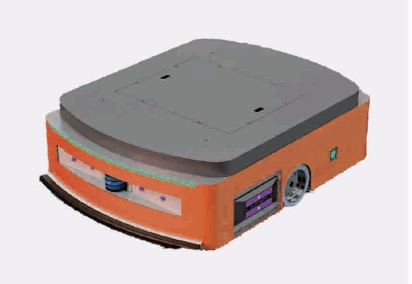
An AGV electric tug is an autonomous towing vehicle that follows pre-programmed routes using navigation technologies such as magnetic tape, laser SLAM (Simultaneous Localization and Mapping), QR code markers, or natural feature navigation. No human driver is needed during normal operation.
The drive system is more sophisticated: dual BLDC (brushless DC) motors in a differential drive configuration, each with a planetary gearbox, Hall sensor encoder, and electromagnetic brake. A dual-channel BLDC motor controller communicates with the AGV's navigation computer via CAN bus or RS485, receiving speed and direction commands multiple times per second. This digital control loop enables the precise differential steering, smooth acceleration ramps, and accurate positioning that autonomous navigation requires.
Head-to-Head Comparison: AGV Electric Tug vs Manual Tow Tractor
The following table compares the two systems across the factors that matter most to factory operations and equipment purchasing decisions.
| Factor | Manual Tow Tractor | AGV Electric Tug |
|---|---|---|
| Upfront Cost | $8,000 - $25,000 | $40,000 - $150,000+ |
| Annual Labor Cost | $35,000 - $60,000 per operator per shift | Near-zero (remote monitoring only) |
| Operating Hours/Day | 8-16 hours (1-2 shifts, limited by operator availability) | 20-24 hours (autonomous, only stops for charging) |
| Route Flexibility | Unlimited — operator adapts in real time | Fixed or semi-fixed routes, requires reprogramming for changes |
| Speed | 0-8 km/h (driver judgment) | 0-5 km/h (controlled, consistent) |
| Safety | Dependent on operator training, fatigue, and attention | Deterministic — LIDAR/obstacle sensors, emergency stop, no fatigue |
| Throughput Consistency | Varies with operator (breaks, fatigue, shift changes) | Constant — same cycle time every trip, 24/7 |
| Motor Type | AC induction or brushed DC (simple throttle control) | BLDC with planetary gearbox (digital speed control, encoder feedback) |
| Drive Configuration | Single motor, rear-axle drive, manual steering | Dual-motor differential drive (steering by speed difference) |
| Communication Protocol | None (human is the controller) | CAN bus or RS485 to navigation system |
| Braking | Mechanical drum/disc brake (foot pedal) | Electromagnetic fail-safe brake (spring-applied, power-off) |
| Battery Efficiency | Lower (AC/brushed DC: 70-85% motor efficiency) | Higher (BLDC: 85-92% motor efficiency, 15-25% longer runtime) |
| Maintenance | Brushes (brushed DC), tires, steering linkage, brake pads | Minimal — no brushes, no steering linkage, brake pads only |
| Typical ROI Period | Immediate (low upfront cost) | 18-30 months (replacing 2+ shift operations) |
Looking for a reliable BLDC motor supplier? Get a sample motor shipped in 7 days.
Request a Quote →Cost Analysis: When AGV Tugs Make Financial Sense
The cost equation for AGV versus manual towing is dominated by one variable: labor. The vehicle cost difference ($30,000-$125,000 premium for AGV) is recovered through operator salary savings. Here is a realistic calculation:
Scenario: 5-Ton Towing Operation, 2-Shift Factory
| Cost Component | Manual Tow Tractor (2 operators) | AGV Electric Tug |
|---|---|---|
| Vehicle purchase | $15,000 | $80,000 |
| Navigation system + integration | $0 | $25,000 |
| Annual operator cost (salary + benefits) | $90,000 (2 operators) | $5,000 (monitoring + remote supervision) |
| Annual maintenance | $3,000 (brushes, brakes, tires, steering) | $1,500 (gearbox inspection, brake pads) |
| Annual energy (electricity) | $2,400 | $1,900 (BLDC efficiency advantage) |
| Year 1 Total Cost | $110,400 | $113,400 |
| Year 2 Total Cost (cumulative) | $205,800 | $121,800 |
| Year 3 Total Cost (cumulative) | $301,200 | $130,200 |
Break-even point: approximately 14 months. After year 3, the AGV tug saves $171,000 compared to the manual tractor — enough to fund a second AGV unit. For single-shift operations with one operator, break-even extends to 30-36 months, which may or may not justify the investment depending on throughput requirements.
Drive System Engineering: Why AGV Tugs Need Different Motors
The choice between AGV and manual towing is not just an operational decision — it fundamentally changes the motor and drive system requirements. Here is why you cannot simply drop a manual tractor's motor into an AGV chassis:
Precision Speed Control
An AGV electric tug must follow a path accurate to plus or minus 10-20 mm. This requires the left and right drive motors to maintain speed accuracy within 1-2%, adjusted 10-50 times per second by the navigation controller. BLDC motors with Hall sensor feedback deliver this precision inherently. AC induction motors cannot achieve this without adding a VFD and encoder — adding cost and complexity that eliminates any price advantage over BLDC.
Flat Torque from Zero RPM
AGV tugs start from standstill under full load — often towing 3-10 tons of loaded carts. BLDC motors deliver rated torque from 0 RPM without any special control tricks. AC induction motors produce zero torque at zero speed and require VFD boost functions to develop adequate starting torque, which adds voltage stress and heat to the motor windings. Brushed DC motors can start under load but suffer from brush wear that accelerates under high starting currents — a reliability concern for AGVs running 20+ hours per day.
Digital Communication
The AGV navigation system commands the motor controller via CAN bus or RS485, sending speed setpoints, acceleration ramps, and torque limits as digital packets. This requires a motor controller designed for digital communication — not the analog throttle interface used in manual tow tractors. Our matched BLDC motor-controller systems support both CAN bus (J1939 and CANopen profiles) and RS485 (Modbus RTU), making integration with major AGV navigation platforms straightforward.
Electromagnetic Brakes for Fail-Safe Operation
Manual tow tractors use foot-operated mechanical brakes — the operator is the safety system. AGV tugs have no operator, so safety must be engineered into the drive system. Spring-applied, power-off electromagnetic brakes automatically lock the drive wheels if power is lost, the navigation system faults, or an emergency stop is triggered. This is not optional — ISO 3691-4 (safety of driverless industrial trucks) requires fail-safe braking. Our drive units include integrated electromagnetic brakes with 5-40 N.m holding torque, matched to the motor and towing capacity.
For a detailed breakdown of motor power sizing by towing capacity (1-30 tons), gear ratio selection, and brake specifications, see our comprehensive AGV electric tug motor and drive system guide.
Safety Comparison: The Data Favors Automation
Industrial tow tractors are involved in a disproportionate number of warehouse and factory accidents. According to OSHA data and European workplace safety reports:
- Operator fatigue accounts for over 70% of tow tractor incidents in facilities running 2+ shifts. AGV tugs do not get tired, distracted, or rush because the shift is ending.
- Pedestrian collisions are the most common tow tractor accident. AGV tugs use LIDAR, ultrasonic sensors, and safety-rated scanners to detect obstacles and stop automatically — typically within 0.2-0.5 seconds, faster than human reaction time (0.7-1.5 seconds).
- Load breakaway — carts separating from the tug during turns or on slopes — is prevented by the AGV's controlled acceleration and speed-limited cornering. Manual operators sometimes take corners too fast under time pressure.
- Speed control is deterministic on AGV tugs (set by software, enforced by the controller), while manual tractors rely on operator discipline. Over-speeding is a common violation in manual towing operations.
That said, AGV tugs introduce a different safety challenge: they must be integrated with the facility's traffic management system, and personnel must be trained to work around autonomous vehicles. Initial deployment requires risk assessment per ISO 3691-4.
Flexibility Comparison: Where Manual Tractors Still Win
Not every towing operation benefits from automation. Manual tow tractors maintain clear advantages in these scenarios:
- Changing routes: If your towing routes change weekly or daily (e.g., construction sites, event venues, seasonal warehouse reconfigurations), reprogramming AGV routes is time-consuming and expensive. A human operator adapts instantly.
- Mixed-traffic environments: Factories with heavy pedestrian traffic, forklift traffic, and irregular obstacles are challenging for AGV navigation. Manual operators use judgment to navigate complex, dynamic spaces that AGV systems may struggle with.
- Non-standard loads: If every towed load is different (different cart sizes, hitch types, load heights), manual operators handle the variability. AGV tugs work best with standardized cart systems and predictable loads.
- Low volume: If you make fewer than 20 towing trips per shift, the labor saving from an AGV tug is small, and the operator can perform other tasks between trips. AGV tugs are dedicated to towing.
- Outdoor and rough terrain: Manual tow tractors handle uneven surfaces, rain, mud, and temperature extremes better than most AGV navigation systems, which rely on clean sensor optics.
Decision Framework: Which System Fits Your Factory?
Use this checklist to determine whether an AGV electric tug or manual tow tractor is the right choice for your operation:
| Criterion | Favors AGV Electric Tug | Favors Manual Tow Tractor |
|---|---|---|
| Shifts per day | 2-3 shifts (16-24 hours) | 1 shift (8 hours) |
| Towing trips per shift | 50+ repetitive trips | Under 20, irregular trips |
| Route complexity | Fixed or semi-fixed routes | Frequently changing routes |
| Floor environment | Clean, indoor, smooth concrete | Outdoor, rough, wet, dusty |
| Cart standardization | Standardized carts with uniform hitches | Mixed cart types and sizes |
| Labor availability | Difficult to hire / high turnover | Stable, available workforce |
| Budget horizon | 3-5 year ROI acceptable | Immediate low-cost solution needed |
| Safety priority | Zero-incident target, near personnel | Standard industrial safety acceptable |
The most common deployment pattern we see among our AGV tug customers is a phased approach: start with one AGV tug on the highest-volume, most repetitive route (typically the main warehouse-to-production-line loop), run it alongside existing manual tractors for 3-6 months to validate throughput and ROI, then expand AGV coverage to secondary routes based on results.
Hybrid Approach: Manual Chassis, AGV-Ready Drive System
Some equipment manufacturers take a middle path: they build tow tractors with BLDC drive systems that support both manual operation (via joystick or tiller) and future AGV conversion. The drive system includes CAN bus communication, encoder feedback, and electromagnetic brakes from day one, even though the initial deployment is manual.
When the customer is ready to automate, they add navigation sensors and an AGV controller — without replacing the entire drive system. This "AGV-ready" approach is increasingly popular because it reduces the cost and risk of the automation transition. Our heavy-duty BLDC drive systems are designed to support this dual-use scenario, with motor controllers that accept both analog joystick input and digital CAN bus commands.
Motor Specification Summary for Both Systems
For equipment builders designing tow tractors or AGV tugs, here is a summary of the motor specifications for each system type at three common towing capacities:
| Specification | Manual Tractor (5T) | AGV Tug (5T) | AGV Tug (15T) |
|---|---|---|---|
| Motor type | AC induction or brushed DC | BLDC 48V | BLDC 48V |
| Motor quantity | 1 (single rear axle) | 2 (differential drive) | 2 (differential drive) |
| Motor power | 1,500W (single) | 2 x 750W | 2 x 2,000W |
| Gearbox | Worm gear (self-locking) | Planetary (93-97% eff.) | Planetary (93-97% eff.) |
| Speed control | Analog pedal/lever | Digital (CAN bus) | Digital (CAN bus) |
| Encoder | None | Hall sensors + optional 1000 PPR | Hall sensors + 1000 PPR |
| Brake | Mechanical (foot pedal) | Electromagnetic (fail-safe) | Electromagnetic (fail-safe) |
| Steering | Manual (steering wheel/tiller) | Differential motor speed | Differential motor speed |
| Communication | None | CAN bus / RS485 | CAN bus / RS485 |
All AGV tug drive configurations are available as complete packages from Shenghe Zhilian — motor, planetary gearbox, electromagnetic brake, encoder, and matched dual-channel controller — tested as an integrated system before delivery. For motor sizing calculations specific to your towing capacity and operating conditions, see our AGV motor sizing guide or the torque and power calculation guide.
Frequently Asked Questions
What is the main difference between an AGV electric tug and a manual tow tractor?
An AGV electric tug operates autonomously using navigation sensors and BLDC motors with digital control (CAN bus/RS485). A manual tow tractor requires a human driver and uses simpler AC or brushed DC motors with analog throttle control. The drive system complexity and cost are significantly different.
Is an AGV electric tug more expensive than a manual tow tractor?
The upfront cost is 3-6x higher ($40,000-$150,000 vs $8,000-$25,000). However, AGV tugs eliminate operator labor costs ($35,000-$60,000/year per operator) and run 20-24 hours per day. Most 2-shift deployments achieve ROI within 18-30 months.
Can I convert a manual tow tractor into an AGV electric tug?
Technically possible but rarely cost-effective. The entire drive system (motors, controllers, encoders, brakes) must be replaced with BLDC components that support digital communication. A purpose-built AGV platform is typically only 10-20% more expensive than a full retrofit and far more reliable.
What BLDC motor power do I need for an AGV electric tug?
Dual 200-400W for 1-3 ton tugs, dual 400-750W for 3-8 ton tugs, dual 1,500-3,000W for 8-30 ton heavy-duty tugs. See our complete AGV electric tug motor guide for detailed sizing tables and gear ratio recommendations.
Which industries benefit most from switching to AGV electric tugs?
Automotive assembly, e-commerce fulfillment, airport baggage handling, food and beverage manufacturing, and hospital logistics. Two-shift or three-shift operations see the fastest ROI because AGV tugs run continuously without operator fatigue or shift handover delays.